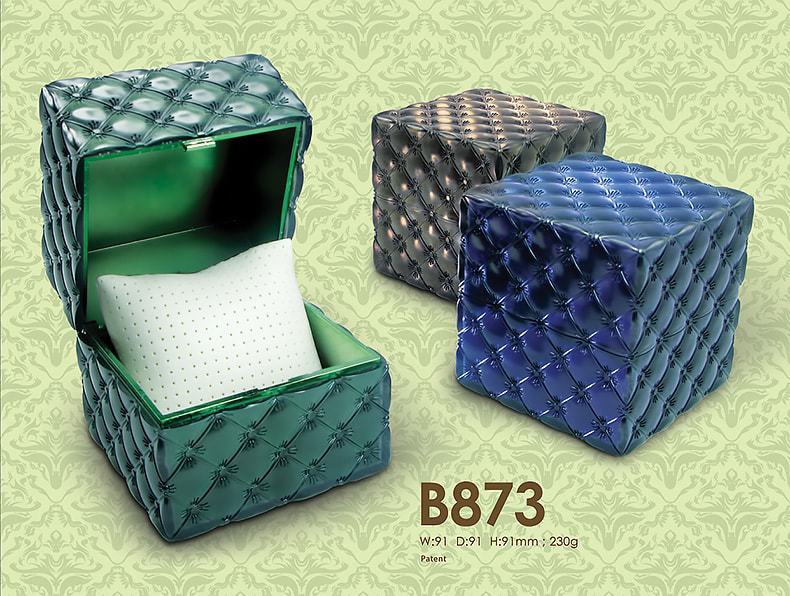
Showing posts with label injection-molding. Show all posts

Monday, September 7, 2020

Four Major Factors on Plastic Injection Molding Quality

Top Custom Plastic Injection Molding Company: PacZone

It's a good idea to choose an injection molding company that’s fast, flexible and customer-driven, especially if you want to order large quantities and fast turnaround. Choose the company that has state-of-the-art plastic injection molding facilities and machines. See if they have full scale thermoplastic and thermoset capabilities and experiences! PacZone is one of such leading plastic injection molding companies from China! 
Custom Plastic Injection Molding Company
Communicate your initial concept with us, and leave everything else from initial prototype through mold design, production to finishing and delivery. PacZone is equipped with a trained staff of experienced engineers, designers and toolmakers who will work with clients from designing and building the actual custom mold to, when necessary, the injection and packaging of the final plastic parts. With the use of sophisticated computer aided design and technology and the latest equipment, we can provide clients with a technically superior mold and assure every product's success, as we’ve always been delivering in the past decades!

Email us at [email protected]
WhatsApp: +86-13691993034
Website:  paczoneboxes.com

Four Major Factors on Plastic Injection Molding Quality

Custom plastic parts by injection molding are not all made equally good! There are many quality pitfalls in the process. A company must have excellent quality management practice and systems to guarantee consistently excellent product quality! 


Here listed are four essential factors that affect the quality of plastic injection molding:

1. Plastic Material

The complexity of plastic material properties determines the complexity of the injection molding process. And the properties of plastic materials may vary greatly with different varieties, brands, manufacturers, and even batches. Different properties, in turn, can lead to completely different molding results.

2. Injected Plastic Temperature

The plastic melt flows into the cooled cavity, and loses some heat due to conduction. At the same time, heat is generated as a result from the shearing, which may or may not produce more heat than what the conduction dissipates, depending on the molding conditions. The viscosity of the melt decreases with increasing temperature. In this way, the higher the injection temperature, the lower the viscosity of the melt and the lower the filling pressure required. Also, the injection temperature is limited by both thermal degradation and decomposition temperatures.

3. Mold Temperature

The lower the mold temperature, the faster the loss of heat due to conduction, the lower the melt temperature, and hence the poorer the flow-ability. This is especially true when using lower injection rates.

4. Injection Time

The impact of injection time on the molding process lies in three areas:
(1) Reducing injection time will increase the shear strain rate. The injection pressure to fill should be increased accordingly.
(2) As reducing injection time will increase the shear strain rate, the viscosity of the melt decreases due to the shear thinning properties. The injection pressure required to fill the cavity will also decrease.
(3) Reducing injection time will increase the shear strain rate. The greater the shear heating is, the less will be the heat loss from conduction. Thus, the melt temperature increases, and the viscosity will lowers. The desired injection pressure to fill the cavity should also be reduced.
The combined effect of the above three conditions results in a "U" shape curve of the injection pressure required to fill the cavity. In other words, there exists an injection time when the injection pressure required is minimal.

Wednesday, June 17, 2020

Cosmetic Packaging Molds Design - Plastic Injection

-- A small cosmetic bottle cap is so complicated to design


Cosmetic packaging produces a rich feeling for consumers, highlights the visual impact, and guarantees the function of the product. Cosmetic packaging can be combined with text, graphics, colors, shapes and a variety of personalized elements to present a variety of styles to meet the modern people's love for beauty and personalized pursuit, simplicity, freshness and elegance. Cosmetic packaging carries multiple meanings in today's packaging market. It can be seen that cosmetic packaging plays an important role in the display and sales process. Diversification, personalization, and refinement are the main development trends of cosmetic packaging in the future.
Cosmetic Packaging Plastic Mold
Fig.1 75ml Moisturizing Gel Cap Design Artwork

Basic appearance requirements of cosmetic packaging:

1. Plastic parts. They must be consistent with the sealed samples. No burrs or sharp edges are allowed. Those defects may cause human injury or affect the functions, or overall appearance.
2. Material requirements. Consistent with the sealed sample, no material replacement is allowed.
3. Flow marks (welding marks). Within one arm's distance from the eyes, not visually obvious.
4. Gap. In comparison with the samples, the gap between the cap and the bottle should not exceed 1mm.
5. Breakout. The breakout should be within the limits, and there should be no obvious scratching feeling when touched by hand.
6. Damage: The container is broken (damaged), or cannot be filled with content inside, compromised function and overall appearance. There should be no depressions, bruises, strains, scrapes, scratches, minor cracks, etc., within one arm's distance from the eyes, it should not be obvious to the eye, it should not affect the product logo, and it should be within the limits.
7. Hygiene: The contact surface is contaminated with foreign substances, impurities, hair, oil, stains, dust and other pollutants (mildew, blood stains, insect pests, etc.).

Graphic printing requirements for cosmetic packaging:

1. Hot Stamping/printing adhesion: Use 3M-810 tape for 1 minute, and then tear it off at a 45°~90° angle quickly. There should be no obvious fall-off or bottom exposure. The font should be clearly visible.

2. Electroplating/spraying adhesion: Use a utility knife to draw 4 to 6 squares with a length of about 0.2 cm on the electroplating/spraying area (scratch the plating/spraying coating), use 3M-810 tape After being stuck to the grid for 1 minute, it is torn off quickly at an angle of 45° to 90°, and it must not fall off.

3. Color difference: The color should conform to the standard sample, and should be uniform, and should not exceed the range of color limit.

4. Surface treatment: electroplating, spraying dotted or linear exposed bottom, pitting, etc., should be within limits.

5. Decoration: The requirements are clear, please note that the content of the manuscript must not be wrong, do not conform to the requirements, and there should be no ghosting of printed text or patterns, uneven edges or jagged edges, missing dots, color dots, etc., which must not affect the overall product appearance and The pattern should be within the limits (color points should not appear on the logo and within 0.5cm near it).

Technical Specifications of the Plastic Cap

Directional deviation: should be <1.5mm. The maximum external dimensions of the 75ML bottle cap products are 23.90±0.25 mm x 26.00±0.20 mm. The average thickness of the plastic parts is 1.65mm. The material of the plastic parts is PP, the shrinkage is 1.015, and the unit weight of the plastic parts is 3.80 grams. 
The technical requirements of plastic parts are that there should be no defects such as burrs, flow lines, pores, warpage, silver lines, cold materials, spray lines, air bubbles and so on. No mold release agent should be used in the molding of plastic parts. The outer cover should be straight, smooth, free from breakage, cracks, and burrs. The color of the outer cover should be uniform. The threaded structure of the outer cover should be intact. The fit of the cap and the bottle should be tight, without slipping or loosening.

Plastic Injection Mold Design

The plastic part is a round bottle cap type plastic part. There is a sealing column with a diameter of 2.15 in the inner center and a taper of 10 on the head. There is a circle of bones near the column to cooperate with the bottle. The bone position plays a strengthening role. There are many shallow grooves evenly distributed on the edge of the cover, which play a role in preventing rotation when the thread is removed. The plastic part has 4.5 internal threads, and the tooth shape is a non-isosceles triangle, see detail D in Figure 1. After analysis, this thread must be fully automatic rotary thread removal, not strong. The production volume of cosmetic packaging materials is huge, so these cosmetic bottle cap molds are multi-cavity molds, generally from 4 to 124 cavities. The number of specific cavities depends on the structure, accuracy, mold structure, presence or absence of the slider core-pulling mechanism, the presence and absence of multiple sub-types and forced demoulding, and the presence or absence of threading mechanisms. It is also related to the production capacity of the injection molding machine, whether it is hot runner molding, or whether it is fully automatic production. The 75ML moisturizing exposed cover mold adopts a mold cavity arrangement of 1 out of 8. The ranking method is 4 per row, and two rows are arranged in a straight line. The way of arranging the mold mainly needs to consider the design of the pouring system and the design of the unthreading mechanism.
Upper Mold
Fig.2 Upper part diagram of the 75ML bottle cap mold

Due to the special structure of multi-cavity molds for cosmetic packaging materials, non-standard mold embryos are often required. When designing the mold, try to complete the mold function by adding templates on the basis of the standard mold base as much as possible. The non-standard mold embryo is 2330, and the moving mold adds two layers of templates to design and place the gear mechanism. The gate of the plastic part is a horn gate, which is a variation of the latent gate. The gate position is at the bottom of the edge of the bottle cap. The advantage of the horn gate is that the gate trace is small and does not affect the appearance of the plastic part. It can be automatically cut off when it is ejected, and the automatic separation of the plastic part and the runner condensate is realized, which is convenient for automatic injection molding.
Cosmetic Packaging Mold Design
Fig.3 Lower part diagram of the multi-cavity cap mold

For multi-cavity molds of cosmetic packaging materials, due to the large production volume, there are often requirements for injection molding cycles. In the case of a thread-releasing mechanism, the injection cycle of 10 ~ 15S is a common requirement. If the hot runner system is used for injection molding, the injection cycle may be shortened. The water transport circuits of the front and rear molds must be designed sufficiently, and the water transport must surround the circumference of each cavity insert to meet reasonable requirements. Another key link of the multi-cavity mold is the machining accuracy. The concentricity of the holes of each template must be within 0.015 in order to maintain the concentricity of the plastic parts. When the concentricity is out of tolerance, the front and rear molds are eccentric, and the wall thickness of the plastic parts will be uneven. After assembly, the bottle cap and the bottle body will have a large gap, and the phenomenon of scraping will occur, which will seriously affect the quality of the product. The dimensional tolerance of the insert in each hole is also within 0.015, making it interchangeable. The processing of the thread core of the movable mold should be noted that the design of the fixture to grind the screw teeth to the size can have high surface roughness requirements, to avoid manual polishing to deform the thread and cause the demoulding rotation to be uneven.
Plastic Cap Mold Construction
Fig.4 Cosmetic packaging mold design artwork

The mold adopts hydraulic motor thread removal mechanism to realize automatic thread removal. The hydraulic motor model is BM-R100. The hydraulic motor drives gear C (key 26) through the large gear 21 on it, and then drives the adjacent four gears A (key 13). Gear A then drives two gears B through the gear B drives another 4 gears A. The entire design is compact and the transmission efficiency is high. After the parting surface is opened, the plastic part is separated from the fixed mold, and the hydraulic motor drives the gear mechanism to rotate, which finally drives the rotating core 12 to rotate. At the same time, the push plate is springed up by 17mm under the action of the spring 8, limited by the plug screw 7 . The anti-rotation rings A and B on the push plate push the plastic parts out of the movable mold core.
Plastic Injection Molds Design
Fig.5 Plastic injection molding design

To facilitate the processing of horn runners, the rotation stop ring is divided into A and B semicircles. A dynamic inner mold 34 and a dynamic inner mold insert 35 are designed at the bone position inside the plastic part, and a thimble is added inside to play a good exhaust effect, and a cooling circuit is designed. Rotor core material adopts DC53, heat treatment HRC56-58, rotor core and movable inner mold 34 only contact at both ends, in order to seal at the top, the bottom is contacted by self-lubricating bearings, and the middle is all evacuation section, which can avoid burning in motion dead. All moving parts and their mounting holes must guarantee machining accuracy.

The merit of the horn gate is that the gate trace is small and does not affect the appearance of the plastic part. It can be automatically cut off when it is ejected, and the automatic separation of the plastic part and the flow channel condensate is realized, which is convenient for automatic injection molding. Attention should be paid to the processing of the thread core of the movable mold. Designing the fixture to grind the screw teeth to the size can have high surface roughness requirements, avoiding manual polishing to make the thread.

Wednesday, June 12, 2019

Advantages of Injection Molding

Injection molding is the most commonly used manufacturing process for plastic parts. The use of injection molding varies greatly in size, complexity, and application. It requires the use of injection molding machines, plastic materials and molds. The plastic is melted in an injection molding machine and then injected into the mold cavity, where it cools and solidifies into the final part.

Injection molding is used to produce thin-walled plastic parts for various applications, the most common of which is a plastic housing. The plastic shell is a thin-walled shell, usually requiring many rib-shaped frames and protrusions inside. These housings are used in a variety of products, including household appliances, consumer electronics, power tools, and car dashboards, etc. Other common thin-walled products include different types of open containers, such as boxes and containers. Injection molding is also used to produce several everyday items, such as toothbrushes or small plastic toys. Many medical devices like valves and syringes, are also manufactured using injection molding.
Advantages of Plastic Injection

6 major advantages of injection molding:

1. Ability to form complex shapes and details

Basically, customers can achieve whatever custom shapes/ forms they like. Other types of manufacturing may have difficulties, if possible, in doing so. Take cardboard boxes for example, make shaped cardboard boxes requires handwork, at rather dear cost. Even so, no all shapes can be realized in cardboard boxes.

2. Excellent surface finish

First, plastic material has greater plasticity in property compared to most other materials. Secondly, the surface finish is determined by the molds. So once the mold is set up as required, the desired surface finish is acquired upon injected. And absolutely all the same, as they are out of one mold.

3. Good dimensional accuracy

If you need absolutely accurate dimensions, then injection molding is no doubt the number one choice. The trick is with the mold design and construction. So strong molding capability is required. Good dimensional accuracy is guaranteed by precision molds.

4. High productivity

Once the molds are ready, all the work becomes repetitive injection process of machines. High efficiency, no break (except for necessary mold maintenance regularly).

5. Low labor cost

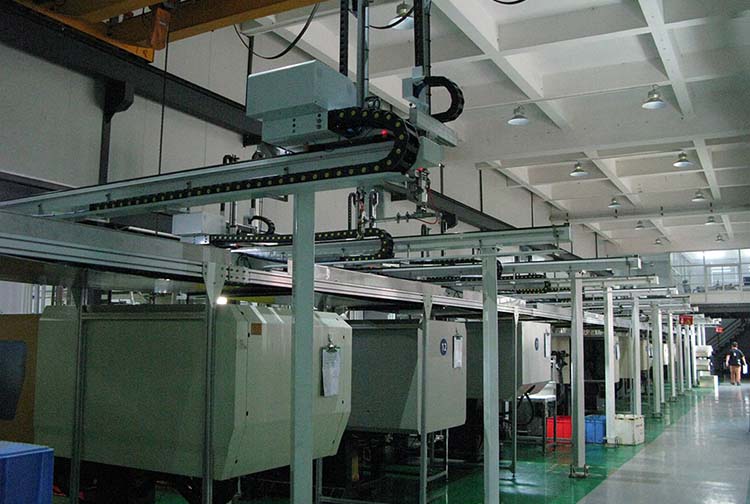
Labor is almost the biggest cost of all projects. Plastic injection molding involves little labor, especially for manufacturers with robotic manipulators in place. Once the initial fixed investment is made, the more you produce, the less breakdown cost will be.

6. Waste materials can be recycled

No waste! As waste materials will be easily recycled for future injection. 

Of course, everything has two sides. It's not all advantages only. The manufacture process of injection molding has its disadvantages as follows. What suits you is the best.

Disadvantages of injection molding:

1. Limited to thin-walled parts
2. High tool and equipment cost
3. Very long delivery time possible

Monday, June 3, 2019

What Plastics Can Be Injection Molded?

What plastics can be injection molded? That's a long list! Simply put, almost all thermoplastics can be injection molded. To consumers, the most common plastics that can be injection molded may be PP, PS, and ABS, etc. Below is a sum-up:

1. PC/ABS blends

That is, the blends of the two types of plastic: polycarbonate and acrylonitrile-butadiene-styrene copolymer. The typical applications of such plastic include, but not limited to: computer housings, electrical appliances, garden machines, automotive parts /dashboards, vehicle tire fenders, etc. 

2. PC/PBT Mixture

Mixture of polycarbonate and polybutylene terephthalate. Mainly used for injection of products that require chemical and corrosion resistance, thermal stability, impact resistance and geometrical stability, such as car bumpers, gear boxes, etc. 

3. HDPE (high-density polyethylene)

Typical applications: refrigerator/freezer bins, storage containers, household kitchenware, sealing lids, etc. 

4. LDPE (low-density polyethylene)

Typical applications: bowls, cabinets, pipe couplings, etc. 

5. PEI (polyetherimide)

It’s an amorphous, amber-to-transparent thermoplastic. Applications: automotive industry (engine parts such as temperature sensors, fuel and air processors, etc.), electrical appliances and electronic equipment (electrical couplings, printed circuit boards, chip housings, explosion-proof boxes, etc.), product packaging, Aircraft internal equipment, medical industry (surgical instruments, tool housings, non-implantable instruments). 

6. ABS plastic 

It is synthesized from three chemical monomers of acrylonitrile, butadiene and styrene. It's also one of the most common engineering plastics. ABS has excellent chemical & electrical properties, it‘s resistant to heat, impact, low temperature and chemicals. It's suitable for making general mechanical parts, wear-reducing and -resistant components, transmission parts and outdoor waterproof watch boxes, etc. Besides, because of its good dimension stability, ABS plastic is often used for 3D printing.

7. PA6 (Polyamide 6 or Nylon 6)

With good mechanical strength and rigidity, it is widely used in structural components. It’s also used to make bearings thanks to its good wear resistance. 

8. PA66 (Polyamide 66 or Nylon 66)

Compared with PA6, PA66 is more widely used in the automotive industry, instrument housings and other products that require impact resistance and high strength. 

9. PBT (polybutylene terephthalate)

PBT is one of the toughest engineering thermoplastic materials. It is a semi-crystalline material with very good chemical stability, mechanical strength, electrical insulation properties and thermal stability. Applications include: household appliances (food processing blades, vacuum cleaner components, electric fans, hair dryer housings, coffee utensils, etc.), electrical components (switches, motor housings, fuse boxes , computer keyboard keys, etc.), automotive industry (radiator grille, body panel, wheel cover, door and window components, etc.). 

10. PC (polycarbonate)

Typical applications: electrical and commercial equipment (computer components, connectors, etc.), appliances (food processors, refrigerator drawers, etc.), transportation industry (vehicle front and rear lights, dashboard, etc.). 

11. PET or PETE (polyethylene terephthalate)

PET is the most common thermoplastic polymer in the polyester family. Typical applications include: automotive industry (structural devices such as mirror boxes, electrical components such as headlight reflectors, etc.), electrical components (motor housings, electrical couplings, relays, switches, microwave ovens Internal device). Industrial applications (pump housings, manual instruments, etc.). Due to its property of high tenacity, it's also widely used for synthetic fabrics.

12. PMMA (Polymethyl methacrylate)

Typical applications: Automotive industry (signal lights, instrument panels and other temperatures, then transparent products can also be obtained using non-filled PET materials.
 

13. POM (polyoxymethylene)

Also known as acetal, polyacetal, and polyformaldehyde. POM has a very low friction coefficient and good geometric stability, especially suitable for the production of gears and bearings. Because it has high temperature resistance, it is also used in piping devices (valves, pump housings), lawn equipment, etc. 

14. PP (polypropylene)

PP is one of the plastic that relates most closely with our life. It's widely used in many industries: automotive industry (mainly using PP with metal additives: fenders, ventilation pipes, fans, etc.), appliances (dishwasher door liners, dryer ventilation pipes, washing machine frames and covers, refrigerators Door pads, etc.), daily consumer goods (lawn and garden equipment such as lawnmowers and sprinklers, water bottles, jewelry cases, etc.). PP material can work with hot runner system. 

15. PPE(polyphenylene ether)

Also known as PPO (polyphenylene oxide). Typical applications: household appliances such as dishwashers, washing machines and other electrical equipment like controller housings and fiber optic connectors. 

16. PS (Polystyrene)

It has high transparency. Typical applications: product packaging, household items, tableware, trays, etc., electrical (transparent containers, light source diffusers, insulating films, etc.). 

17. PA12 (polyamide 12 or nylon 12)

Typical applications: water meters and other commercial equipment, cable sleeves, mechanical cams, sliding mechanisms and bearings. 

18. PVC (polyvinyl chloride)

Water supply pipes, domestic pipes, house wall panels, commercial machine housings, electronic product packaging, medical equipment, food packaging, etc. 

19. SA (styrene-acrylonitrile copolymers)

Mostly common articles out of plastic injection molding from SA include electrical sockets, housings, household commodities, kitchen appliances, refrigerator devices, TV bases, cassette boxes, etc., automotive industry (headlight box, reflective environment, instrument panel, etc.), household items (tableware, food knives, etc.), and cosmetics packaging, etc.