Showing posts with label Plastic-industry. Show all posts

Sunday, September 5, 2021

Advantages and disadvantages of the application of PLA in China's packaging industry

 The Institute of Biodegradable Materials reported that the packaging industry has now become a major source of "white pollution", especially the waste accumulated throughout the year in the express delivery industry has caused a great burden on the planet. Therefore, the packaging industry has vigorously advocated the 3R1D principles of packaging Reduction, Reuse, Recycle, and Degradable in recent years, and encourages the development of degradable packaging materials.

Background:

    The "Opinions on Further Strengthening the Control of Plastic Pollution" issued by the National Development and Reform Commission on January 19, 2020 clearly stated that by the end of 2022, the use of postal express outlets in Beijing, Shanghai, Jiangsu, Zhejiang, Fujian, Guangdong and other provinces and cities shall be prohibited in advance. Degradable plastic packaging bags, disposable plastic woven bags, etc., reduce the use of non-degradable plastic tape. By the end of 2025, non-degradable plastic packaging bags, plastic tapes, disposable plastic woven bags, etc. will be banned at postal express outlets nationwide.

    Compared with the traditional packaging material PE and PP, PLA (polylactic acid) has high transparency, good processability, and good printability. It has advantages when used as packaging materials. It can be made into films, foam materials and containers, such as flexible packaging bags and plastics. Bottles, cushioning materials, disposable tableware, etc.

PLA film

    PLA film mainly includes high transparent film, heat shrinkable film, pellet blend blown film bag and PLA-based composite film.

    PLA film can replace traditional film materials as a new packaging material. For example, Wal-Mart supermarket requires the use of fully degradable PLA film bags to replace traditional non-degradable PE bags. Japanese electronic products have also begun to use PLA nano-composite film packaging.

  PLA container

    Due to the degradability of PLA, PLA containers are mostly used in short-term shelf food packaging.

    The transparency and oxygen barrier of PLA bottles are better than PE bottles. NatureWorks uses PLA bottles to package organic juice drinks, which can guarantee a 60-day shelf life. The Danish Faerch Plastics Company uses PLA to package low-temperature pasta, meat, salads and other fresh foods, which can achieve a long shelf life. The European market has launched PLA-made yogurt cups and beverage packaging bottles, which can meet EU standards for food containers.

    The highly transparent and heat-resistant PLA water bottles and PLA baby bottles developed by Hangzhou Xusheng Technology Co., Ltd. can meet the application conditions that are both transparent and heat-resistant (water bottles and baby bottles require heat-resistant temperature ≥100°C). The domestic market also coats PLA on paper to make coated paper cups, which are used in various water- and oil-proof food packaging.

PLA foam material

    PLA foaming material is also biodegradable and can be used to produce disposable catering utensils (such as fast food boxes, instant noodle bowls, etc.) and cushion packaging without white pollution. For example, the "Graft" series of disposable tableware is designed with PLA foam material to have a realistic shape of fruits and vegetables, which is environmentally friendly and beautiful.


      Compared with traditional PE and PP materials, PLA has a higher melting point (about 180°C) and better processability. The hardness and mechanical properties of PLA are similar to those of traditional resins, and it has good transparency and excellent gloss. It is especially suitable for packaging materials.

Disadvantages:

     However, compared with high-barrier nylon, polyvinylidene chloride, etc., PLA has poor oxygen and water vapor barrier properties, insufficient protection for oily foods, and PLA has poor toughness, low heat distortion temperature, and poor impact resistance. It is often unable to meet the requirements of circulation in harsh environments. In addition, the degradation cycle of PLA is not well controlled. Compared with traditional resins, the price is slightly higher (about 30,000 yuan/ton). At this stage, it is not advantageous for packaging.

     Although PLA has shortcomings such as relatively brittle texture, poor heat resistance, and poor barrier properties, these shortcomings can be corrected by modification such as copolymerization, blending, and plasticization. In recent years, scholars at home and abroad have been actively studying the polymerization process and modification technology of PLA, and have developed a variety of green packaging materials using PLA as raw materials.

Monday, September 7, 2020

Four Major Factors on Plastic Injection Molding Quality

Top Custom Plastic Injection Molding Company: PacZone

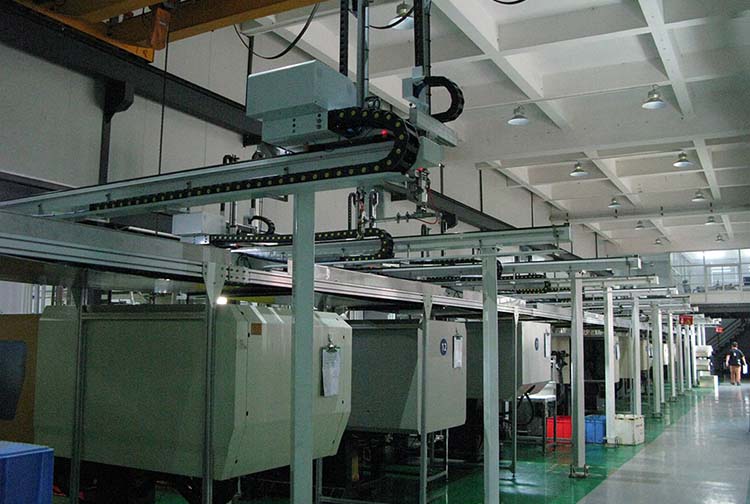
It's a good idea to choose an injection molding company that’s fast, flexible and customer-driven, especially if you want to order large quantities and fast turnaround. Choose the company that has state-of-the-art plastic injection molding facilities and machines. See if they have full scale thermoplastic and thermoset capabilities and experiences! PacZone is one of such leading plastic injection molding companies from China! 
Custom Plastic Injection Molding Company
Communicate your initial concept with us, and leave everything else from initial prototype through mold design, production to finishing and delivery. PacZone is equipped with a trained staff of experienced engineers, designers and toolmakers who will work with clients from designing and building the actual custom mold to, when necessary, the injection and packaging of the final plastic parts. With the use of sophisticated computer aided design and technology and the latest equipment, we can provide clients with a technically superior mold and assure every product's success, as we’ve always been delivering in the past decades!

Email us at [email protected]
WhatsApp: +86-13691993034
Website:  paczoneboxes.com

Four Major Factors on Plastic Injection Molding Quality

Custom plastic parts by injection molding are not all made equally good! There are many quality pitfalls in the process. A company must have excellent quality management practice and systems to guarantee consistently excellent product quality! 


Here listed are four essential factors that affect the quality of plastic injection molding:

1. Plastic Material

The complexity of plastic material properties determines the complexity of the injection molding process. And the properties of plastic materials may vary greatly with different varieties, brands, manufacturers, and even batches. Different properties, in turn, can lead to completely different molding results.

2. Injected Plastic Temperature

The plastic melt flows into the cooled cavity, and loses some heat due to conduction. At the same time, heat is generated as a result from the shearing, which may or may not produce more heat than what the conduction dissipates, depending on the molding conditions. The viscosity of the melt decreases with increasing temperature. In this way, the higher the injection temperature, the lower the viscosity of the melt and the lower the filling pressure required. Also, the injection temperature is limited by both thermal degradation and decomposition temperatures.

3. Mold Temperature

The lower the mold temperature, the faster the loss of heat due to conduction, the lower the melt temperature, and hence the poorer the flow-ability. This is especially true when using lower injection rates.

4. Injection Time

The impact of injection time on the molding process lies in three areas:
(1) Reducing injection time will increase the shear strain rate. The injection pressure to fill should be increased accordingly.
(2) As reducing injection time will increase the shear strain rate, the viscosity of the melt decreases due to the shear thinning properties. The injection pressure required to fill the cavity will also decrease.
(3) Reducing injection time will increase the shear strain rate. The greater the shear heating is, the less will be the heat loss from conduction. Thus, the melt temperature increases, and the viscosity will lowers. The desired injection pressure to fill the cavity should also be reduced.
The combined effect of the above three conditions results in a "U" shape curve of the injection pressure required to fill the cavity. In other words, there exists an injection time when the injection pressure required is minimal.

Tuesday, July 14, 2020

Eco-friendly Packaging Materials for Food

Unfortunately, so far there's no perfect eco-friendly packaging material, which is both really environmentally friendly and economically feasible. There's yet a long way to go toward this end. Common environmentally friendly packaging materials for food are:

#1. Biodegradable plastics:

Plastic is generally difficult to degrade. Thus there are many plastic wastes buried in the ground that will not decay for several years. And there's the Great Pacific Garbage Patch, too. Biodegradable plastics refer to plastics that can be degraded by microorganisms into water, carbon dioxide (or methane) and biomass under specified conditions. The development of biodegradable plastic packaging materials and phasing-out of non-degradable plastic packaging materials are the major trends globally and becoming one of the most popular material R&D projects. Although degradable plastics are easy to process and the price is gradually decreasing, the prices remain too high to be popular compared to ordinary plastics. 
Biodegradable Food Packaging

#2. Metal packaging materials:

Since metal packaging materials are easier to recycle and handle, the pollution of their waste to the environment is relatively smaller compared to plastics and paper. Commonly used metal packaging materials are tinplate and aluminum, which are widely used in the manufacture of food and beverage packaging cans;
Metal Packaging Material for Food

#3. Glass - Eco-friendly packaging materials

Milk, soft carbonated beverages, alcohol and jams are generally packaged in glass containers, and some cooking utensils and tableware are also packaged in glass. The main characteristics of glass packaging materials are beauty, hygiene, corrosion resistance, low cost, and inert materials, which have little pollution to the environment; its disadvantages are that it is fragile, bulky, and expensive.

#4. Paper - Eco-friendly gift boxes packaging

Since paper products can be recycled again after use, a small amount of waste can be naturally decomposed in the natural environment, which has no adverse impact on the natural environment. Therefore, it is recognized that paper, cardboard and paper products are green products in the world, and meets the requirements of environmental protection. Therefore, paper/cardboard packaging is a good replacement of plastics, to some degree and plays an active role against white pollution.
Eco-friendly Packaging Materials for Food

The above four are the most common eco-friendly packaging materials. Try to use eco-friendly watch gift boxesAt the same time, more and more environmentalists are advocating multi-use textile bags to reduce environmental pollution.

Tuesday, June 30, 2020

How to Design Custom Jewelry Packaging

Today's jewelry packaging design is mainly based on the shape and color use as marketing methods. Jewelry packaging is the external image and first impression left to consumers. So how to design a good jewelry package is extremely important.

Positioning of Custom Jewelry Packaging

Jewelry packaging is different from those of other commodities. Not only is the product itself noble, but its packaging design needs to highlight the brand culture. Jewelry packaging needs to satisfy people's psychological feelings, so the design positioning is usually elegant, gorgeous, expensive, and fashionable. Nowadays, some brands no longer pursues bright colors when designing jewelry packaging. Instead, the minimalist concept  is deemed by some as high-end, classic and timeless. They hold that minimal design will still make sense even after a few decade. 

Visual Appeals of Jewelry Packaging

Jewelry packaging is not only meant for protection of jewelry, but also needs to consider its aesthetics, so that customers can enjoy beauty in jewelry and its packaging, thereby promoting sales. The performance of the visual transmission of jewelry packaging is mainly the combination of text, graphics, colors and other elements, which brings beauty to customers.

To make the jewelry packaging more attractive, you need to start with the color. The color is generally common in the jewelry packaging. Single-color expression is mostly common, using the base color of the material as the main or only color tone, though multi-color expressions also exist. Color will bring different visual responses, and it is necessary to design from the consumer's psychology.

Choice of Jewelry Packaging Materials

Buyer and designers choose the preferred materials according to the brand positioning, design patterns, target markets & consumers, etc. Material must be determined before design work proceeds. And, vice versa, the design patterns affect the use of material. Usually, plastic, cardboard and wood are most common for main structures. Silk, high-grade paper, leather , PU among others or their combinations are used as auxiliary materials. Basically, there are 5 common types of material for jewelry packaging.  

1.  Low-to-mid-end plastic jewelry box

Most of the bulk jewelry boxes packaging on the market are made of plastic. Wrap with a layer of  leatherette paper outside. Such boxes are relatively cheap, generally used in silver jewelries.

2. Cardboard jewelry boxes

The greatest merit of paper & cardboard jewelry boxes may be being more eco-friendly. But they are not firm, nor good for long-term storage, and not necessarily cheaper, either.

3. Flocking jewelry boxes 

Flocking boxes are also made of plastic as the main structure, with surface flocking. They are lighter and look more beautiful. The plastic material is not so perceptible thanks to the velvet lining. Flocking boxes are relatively higher-grade than paper boxes. Also more commonly used for silver and gold jewelries.
Plastic Jewelry Packaging

4. PU jewelry boxes

Such boxes also use plastic molded structure, wrapped in paper or PU leather. This kind of packaging looks slightly more high-end while the cost is not too high. It is often used by some mid-end customers.

5. Wooden material. 

Solid wood jewelry box belongs to relatively high-end jewelry packaging, generally with solid wood as the main material, paint treatment, many companies use this solid wood jewelry boxes. Minimum quantities required are small, but the production cycle is long and it's much more expensive.

Jewelry packaging's focus has shifted from mere storage and protection in the past to the current integrated role of protection, storage and marketing. Not only the combination of simple shape, text, color matching, but also creates an brand image that impresses, maintain s the credibility and continuity of the brand.

PacZone employs unlimited creativity to create a series of custom jewelry packaging that belongs to your brand..

Tuesday, June 23, 2020

What do plastic recycle numbers mean? ♲

Plastic is very common in daily life and can be said to be everywhere. Generally, there's a triangle symbol at the bottom of plastic products. This triangle symbol is a plastic recycling symbol, ranging from 1 to 7. Each number represents a different raw plastic material for manufacturing. Therefore, the use varies. That is to say, there are 7 types of plastic in terms of recycling. The following is a brief introduction to the meaning of the 7 types of plastics.

#1 Recycle number "01"-PET (polyethylene terephthalate)

Mineral water bottles and carbonated beverage bottles are made of this material. Beverage bottles cannot be recycled for hot water. This material is heat-resistant to 70°C and is only suitable for warm or frozen drinks. High-temperature liquids or heating are easy to deform, and substances harmful to the human body are dissolved.
7 Types of Plastic

#2 Recycle number "02"- HDPE (High Density Polyethylene)

Plastic containers for cleaning products, bath products, and plastic bags currently used in supermarkets and shopping malls are mostly made of this material, which can withstand a high temperature of 110 ℃, indicating that plastic bags for food can be used to hold food.
7 Types of Plastics -02

#3 Recycle number "03"- PVC (polyvinyl chloride)

PVC may be infamous for its harm. The toxic substances easily released by such plastic products mainly come from two sources. One is the single molecule vinyl chloride that has not been completely polymerized in the production process, and the other is the harmful substances in the plasticizer added. These two toxic substances are easily released in presence of high temperatures and fats, and cause cancer when entering the human body with food. At present, containers of PVC has been less used for food packaging. If it is in use, never let it heat up.
7 types of plastic - recycling

#4 Recycle number "04"- LDPE (low density polyethylene)

Packaging materials like plastic wrap, plastic film, etc. are all made of this plastic. It does not have strong heat resistance. Generally, the qualified PE cling film will incur a certain degree of hot melting when the temperature exceeds 110 ℃, leaving some plastic agents that the human body cannot decompose.
7 Types Plastic - Recycling

#5 Recycle number "05"- PP (polypropylene)

Microwaveable meal boxes are made of this material and are resistant to high temperatures of 130°C. PP is the only plastic box that can go in a microwave oven and can be reused after careful cleaning. When it comes to reusable food contact, PP is highly recommended. 
But PP has its disadvantages, too:
 - High thermal expansion coefficient which limits its high temperature applications. 
 - Susceptible to UV degradation  
 - Poor resistance to chlorinated solvents and aromatics.
 - It is known to be difficult to paint as it has poor bonding properties.
 - High flammability.
Types of Plastics - Recycling

#6 Recycle number "06"-PS (polystyrene)

This is the material used to make bowl-shaped instant noodle boxes and foamed snack boxes. It is both heat-resistant and cold-resistant, but cannot be placed in microwave ovens to avoid releasing chemicals under high temperature. Besides, it has high transparency and is relatively fragile.
Types of Plastics - Recycling

#7 Recycle number "07"- PC and other categories

PC is a material that is widely used, especially for the manufacture of baby nursing bottles, water bottles, compact discs, etc. However, as it contains BPA (bisphenol A), it has been highly controversial. [BPA is a chemical that proves harmful to human health en environments. People with higher levels of exposure have an increased risk of cardiovascular disease, obesity and diabetes, according to some studies.] Experts pointed out that in theory, as long as bisphenol A is 100% converted into a plastic structure in the process of making, the product will be completely free of BPA, let alone releasing. However, if a small amount of BPA is not converted into a plastic structure of PC, it may be released and enter food or drink. Therefore, pay special attention when using this plastic container. After all, no one would risk his own health.
It must be noted that, #7 does not represent PC alone. All "OTHER" plastics that are not listed from #1 to #6 are categorized as #07. 
Recycle numbers

Thursday, May 14, 2020

2019 China Plastics Processing Industry Review and Prospect

Source: CPPIA (China Plastics Processing Industry Association)

In 2019, despite the complex situation where risks and challenges both at home and abroad have increased significantly, the plastics processing industry adheres to the new development concept, focuses on the supply-side structural reform, and uses scientific and technological innovation as the driving force to accelerate structural adjustment and promote sustained and steady growth. The industry achieved a steady and progressive development. At the beginning of 2020, due to the impact of the pandemic COVID-19, China's economy will see a significant decline in the short term, but the trend of steady development and long-term improvement does not change, according to analyses.

2019 Review of China Plastic Processing

1. Keep stable & make slight progress

(1). Main economic indicators continue to grow

In January-December 2019, the national aggregate output of plastic products reached 81.841 million tons, an increase of 3.91% year-on-year. The operating income of 15835 plastic enterprises above designated size was 190.7748 billion yuan(about US$ 27B), an increase of 2.77 year-on-year, accounting for the operating income of all national industrial enterprises above designated size 1.8%. They realized profits of 105.452 billion yuan(about US$ 15B), an increase of 12.68% year-on-year, accounting for 1.7% of the realized profits of all industrial enterprises above designated size in the country; operating income profit rate was 5.53%. According to preliminary estimates, from January to December 2019, the cumulative export value of plastic products was US$74.933 billion (about US$ 10.7B), a year-on-year increase of 7.94%. The main economic indicators of the industry continued to grow.

(2) Keep an improving trend, with a remarkable profit increase

In 2019, under the synergy of technological progress, structural optimization, relatively stable raw material prices, the implementation of tax reduction policies, robotization and the scale advantages of large enterprises, the total profit of the plastics processing industry gained a significant increase of 12.68% year-on-year.

(3) Achievements in structural adjustment

In 2019, the plastics processing industry eliminated obviously backward production capacity and accelerated product transformation and upgrading. The industry has vigorously implemented measures such as the three-product strategy and gradually transformed into high-end, branded, and green. For example: the battery separator industry expands the production capacity of high-end products; the plastic wiring equipment industry accelerates the development and utilization of five high-end special materials for general plastics, and accelerates the industrialization of modified composite plastics, special engineering plastics, and alloy materials; and the plastics additives industry companies carry out product structure Adjustment; companies in the rotomolding industry first introduced nylon rotomolding materials to replace imports and have applications in construction machinery fuel tanks and other fields; high-end polyester film domestic products can replace imports, and the number of imports has been further reduced; artificial leather and synthetic leather has accelerated the elimination of backward production capacity. The production of eco-type synthetic leather using environmentally friendly materials such as waterborne polyurethane has increased; the proportion of technologically innovative products has continued to increase, further advancing the structural adjustment and transformation of the plastic industry.

(4) Further industry concentration

The number of enterprises above designated size in the plastics processing industry has grown steadily. At the end of 2019, there were 15,835 enterprises listed on the regulations, an increase of 264 from the end of the previous year, with a growth rate of 1.7%. In the plastics processing industry, the development of leading enterprises with larger scale and better overall quality is accelerating and the number is increasing, and their corresponding market comprehensive competitiveness is also gradually improved; the development of small-scale and low-tech enterprises has encountered difficulties, and some Stop production or change production. Orders are increasingly being transferred to large enterprises with strong strength, standardized management and excellent quality. The industry continues to show a trend that the stronger are stronger and the weaker are weaker. The allocation of resources is also tilted towards advantageous enterprises, and the industrial structure is further optimized.

(5) The industry's overall innovation awareness is enhanced

The overall innovation awareness of the industry has increased, and the market demand for high-end products has grown. Technological innovation, improvement of craftsmanship, and consumption upgrade continue in the industry. Enterprises focus on innovation and transformation, equipment upgrades, machine substitutions and advancement, labor reduction, cost reduction, and improved management efficiency, which contribute to high-quality development.

2. Take multiple measures to overcome difficulties

In 2019, China's plastics processing industry overcomes the adverse situation of Sino-US trade frictions, structural excesses of some products, strict environmental protection, and negative public opinion on plastic waste. Multiple measures were taken to overcome difficulties and promote continuous progress of the industry.

(1) Active response to Sino-US trade frictions and maintain export stability

Starting from May 10, 2019, the United States imposed a tariff of 25% on imports of US$200 billion from China that originally was 10%. According to the Chinese royalty number, there are 36 tariff codes involving plastic products, accounting for 60.45% of 2017 exports. The United States is the largest importer of China's plastic products, and the increase in tariffs has a huge impact on exports. Industry companies actively responded and took various measures to stabilize exports. With the joint efforts of the industry, although the value of exports to the United States declined slightly in 2019, the overall value of exports achieved a large increase.

(2) Vigorously promote ecological construction and promote green development

At the beginning of 2019, the General Office of the Hainan Provincial Committee and the General Office of the Provincial Government jointly issued a document announcing that the production, sale and use of disposable non-degradable plastic products will be completely banned within a certain period of time in Hainan Province. At the end of the year, the Sixteenth Meeting of the Standing Committee of the Sixth People’s Congress of Hainan Province adopted the “Provisions on the Ban of One-Time Non-Degradable Plastic Products in the Hainan Special Economic Zone”. Many countries and regions in the world have also proposed to ban the use of disposable plastic products such as plastic bags. The problem of plastic pollution has received unprecedented attention, and there have been many negative reports in the media. On the basis of calling on people to use plastics correctly and scientifically recycling and disposing of disposable plastic products, the industry has carried out the development and utilization of biodegradable materials, reducing the reduction of disposable plastic products, reducing carbon emissions, and promoting the recycling of waste plastics. A lot of active and effective work.

CPPIA undertook the "Plastic Ecology Construction Sub-Forum" of the China Engineering Science and Technology Forum "Polymer Sustainable Development Engineering Technology Forum", held "Plastic Ecology and Green Technology Innovation System Construction" series of activities, and held "China-Japan Ocean "Plastic Pollution Response Symposium", through similar related activities, actively lead and promote waste plastic prevention and plastic ecological construction, advocate that all sectors of society should reduce the production of waste plastics from production, application and recycling links, and call on the society to correctly understand, The media scientifically reported the problem of waste plastic pollution.

(3) Expand new applications and create new needs

In 2019, the industry will actively expand new application areas and create new demand and new economic growth dimensions. Under the background of the downturn in the real estate industry, under the promotion and influence of relevant national policies, industries such as plastic pipelines have deployed the “Belt and Road”, sponge city construction, smart city underground pipe network and comprehensive pipe corridor construction, clean energy utilization, prefabricated construction, Black and odorous water treatment, rural water conservancy construction, rural human settlement environment improvement, etc., gain new market space. The application market of EPS wall insulation board is light, and it actively develops innovative application markets such as integrated boards, floor heating, and sound insulation boards, and has achieved good results. In 2019, the production and sales of automobiles decreased, and the overall consumption of rigid and soft polyurethane foam for vehicles (excluding refrigerated vehicles) declined year-on-year, but polyurethane actively explored new markets and achieved growth in other applications. In the context of insufficient market demand, the artificial leather and synthetic leather industry is still actively expanding new uses to promote ecological and fashionable synthetic leather and other high-end synthetic leather to gradually become the mainstream of the market.

(4) Promote intelligent processes, reduce costs and improve quality

Plastic processing costs, especially labor costs, continue to increase, and the shortage of skilled workers and difficulties in recruiting workers have become more prominent. In order to reduce labor costs, improve product quality, and create greater profit margins, the plastics processing industry actively promotes machine substitutions, shifting from labor-intensive to technological innovation. For example, the plastic wiring equipment industry has gradually realized the automation of production, powder, and feed equipment. The artificial leather and synthetic leather industry has consciously adopted and practiced intelligent manufacturing. There has been a new growth. Plastic household goods companies have learned to model "close to unmanned intelligent injection molding workshop" To improve the level of intelligent manufacturing.

2020 Prospect

1. Industrial structure adjustment will keep a good momentum

With the further increase of industry concentration in 2020, the polarization of the stronger will continue, and market share and profit growth will be further concentrated in advantageous enterprises and new industries.

2. product export and capacity output will be coordinated

On January 15th, China and the USA signed the first phase of the economic and trade agreement. The USA canceled the tariffs originally scheduled to take effect in December and reduced the tariffs imposed on US$120 billion of Chinese goods on September 1 to 7.5%. Although the signing of the economic and trade agreement prevented the continued escalation of the trade friction between the two nations in 2020, the 25% tariff imposed on Chinese goods worth US$250 billion remained unchanged, and difficulties in exporting to the American markets remained. The plastic products industry should aim at emerging international markets, carry out extensive international cooperation, diversify development, from product exports to output capacity, and promote the expansion of market space for plastics-related industries.

3. Deeper implementation of the "QVB" strategy

With the development of society and economy, the requirements on downstream suppliers have become more standardized, forcing enterprises to standardize production, and promote enterprises to implement the "QVB" strategy. In the future, the industry must adapt to the market orientation of high-end, personalized, small batch, and individual customization, promote the rapid growth of new production models and new formats, and vigorously cultivate new economic growth points. Industry companies have also strengthened collaborative innovation in the industrial chain, researching and developing new materials, and improving product performance. By Improving Quality, Increasing Variety, Creating Brands("QVB" strategy), promote the spirit of craftsmen, advocate the manufacture of high-quality goods, promote the transformation and upgrading of the industry, and realize the transformation from big to strong.

4. Accelerate the promotion of ecological construction and green sustainable development of the industry

The 10th meeting of the Central Committee for Comprehensive Deepening Reform held on September 9, 2019 reviewed and passed the "Opinions on Further Strengthening the Treatment of Plastic Pollution". The meeting pointed out: Actively respond to plastic pollution, we must firmly establish a new development concept, and orderly prohibit and restrict the production, sales and use of certain plastic products, actively promote recyclable and easily-recyclable and degradable alternatives, increase the supply of green products, standardize the recycling of plastic waste, establish and improve management systems at all links, and effectively and effectively control plastic pollution. Plastic industry personnel actively participate in making a difference. Looking forward to 2020, the industry's ecological construction and green sustainable development will accelerate. In the production field, we must improve industry self-discipline, adhere to green and environmentally friendly production, and reduce the disorderly discarding of plastic particles and finished products from the production, transportation, and sales of plastic products; advocate the society to use plastic products scientifically and rationally, and promote plastic products many times. Use and plastic packaging recycling; the recycling and recycling field should actively and scientifically promote the garbage classification system, improve the collection and disposal of plastic garbage, strengthen the scientific and systematic management of the recycling and utilization of waste plastics, and form a long-term mechanism.

5. Policies help relax the impact of COVID-19

The outbreak of COVID-19 in China during the Spring Festival has caused a certain degree of impact on the production, and the plastics industry needs to actively respond. At present, it has no impact on the enterprises producing epidemic prevention related products, but has a relatively large impact on those of other products. The restart and production of enterprises,  personnel, transportation, raw material supply and capital, etc. almost every aspect has suffered. Recently, ministries and commissions and local governments have successively issued relevant policies, involving finance, taxation, human resources, etc., to encourage the industry to resume work and production, help solve industry difficulties, and strive to minimize the impact. The analysis of the impact is phased. With the improvement of the pandemic situation, the stimulus of policies, and the recovery of the market, 2020 will be a year of steady development and long-term improvement of the industry.

Monday, June 3, 2019

What Plastics Can Be Injection Molded?

What plastics can be injection molded? That's a long list! Simply put, almost all thermoplastics can be injection molded. To consumers, the most common plastics that can be injection molded may be PP, PS, and ABS, etc. Below is a sum-up:

1. PC/ABS blends

That is, the blends of the two types of plastic: polycarbonate and acrylonitrile-butadiene-styrene copolymer. The typical applications of such plastic include, but not limited to: computer housings, electrical appliances, garden machines, automotive parts /dashboards, vehicle tire fenders, etc. 

2. PC/PBT Mixture

Mixture of polycarbonate and polybutylene terephthalate. Mainly used for injection of products that require chemical and corrosion resistance, thermal stability, impact resistance and geometrical stability, such as car bumpers, gear boxes, etc. 

3. HDPE (high-density polyethylene)

Typical applications: refrigerator/freezer bins, storage containers, household kitchenware, sealing lids, etc. 

4. LDPE (low-density polyethylene)

Typical applications: bowls, cabinets, pipe couplings, etc. 

5. PEI (polyetherimide)

It’s an amorphous, amber-to-transparent thermoplastic. Applications: automotive industry (engine parts such as temperature sensors, fuel and air processors, etc.), electrical appliances and electronic equipment (electrical couplings, printed circuit boards, chip housings, explosion-proof boxes, etc.), product packaging, Aircraft internal equipment, medical industry (surgical instruments, tool housings, non-implantable instruments). 

6. ABS plastic 

It is synthesized from three chemical monomers of acrylonitrile, butadiene and styrene. It's also one of the most common engineering plastics. ABS has excellent chemical & electrical properties, it‘s resistant to heat, impact, low temperature and chemicals. It's suitable for making general mechanical parts, wear-reducing and -resistant components, transmission parts and outdoor waterproof watch boxes, etc. Besides, because of its good dimension stability, ABS plastic is often used for 3D printing.

7. PA6 (Polyamide 6 or Nylon 6)

With good mechanical strength and rigidity, it is widely used in structural components. It’s also used to make bearings thanks to its good wear resistance. 

8. PA66 (Polyamide 66 or Nylon 66)

Compared with PA6, PA66 is more widely used in the automotive industry, instrument housings and other products that require impact resistance and high strength. 

9. PBT (polybutylene terephthalate)

PBT is one of the toughest engineering thermoplastic materials. It is a semi-crystalline material with very good chemical stability, mechanical strength, electrical insulation properties and thermal stability. Applications include: household appliances (food processing blades, vacuum cleaner components, electric fans, hair dryer housings, coffee utensils, etc.), electrical components (switches, motor housings, fuse boxes , computer keyboard keys, etc.), automotive industry (radiator grille, body panel, wheel cover, door and window components, etc.). 

10. PC (polycarbonate)

Typical applications: electrical and commercial equipment (computer components, connectors, etc.), appliances (food processors, refrigerator drawers, etc.), transportation industry (vehicle front and rear lights, dashboard, etc.). 

11. PET or PETE (polyethylene terephthalate)

PET is the most common thermoplastic polymer in the polyester family. Typical applications include: automotive industry (structural devices such as mirror boxes, electrical components such as headlight reflectors, etc.), electrical components (motor housings, electrical couplings, relays, switches, microwave ovens Internal device). Industrial applications (pump housings, manual instruments, etc.). Due to its property of high tenacity, it's also widely used for synthetic fabrics.

12. PMMA (Polymethyl methacrylate)

Typical applications: Automotive industry (signal lights, instrument panels and other temperatures, then transparent products can also be obtained using non-filled PET materials.
 

13. POM (polyoxymethylene)

Also known as acetal, polyacetal, and polyformaldehyde. POM has a very low friction coefficient and good geometric stability, especially suitable for the production of gears and bearings. Because it has high temperature resistance, it is also used in piping devices (valves, pump housings), lawn equipment, etc. 

14. PP (polypropylene)

PP is one of the plastic that relates most closely with our life. It's widely used in many industries: automotive industry (mainly using PP with metal additives: fenders, ventilation pipes, fans, etc.), appliances (dishwasher door liners, dryer ventilation pipes, washing machine frames and covers, refrigerators Door pads, etc.), daily consumer goods (lawn and garden equipment such as lawnmowers and sprinklers, water bottles, jewelry cases, etc.). PP material can work with hot runner system. 

15. PPE(polyphenylene ether)

Also known as PPO (polyphenylene oxide). Typical applications: household appliances such as dishwashers, washing machines and other electrical equipment like controller housings and fiber optic connectors. 

16. PS (Polystyrene)

It has high transparency. Typical applications: product packaging, household items, tableware, trays, etc., electrical (transparent containers, light source diffusers, insulating films, etc.). 

17. PA12 (polyamide 12 or nylon 12)

Typical applications: water meters and other commercial equipment, cable sleeves, mechanical cams, sliding mechanisms and bearings. 

18. PVC (polyvinyl chloride)

Water supply pipes, domestic pipes, house wall panels, commercial machine housings, electronic product packaging, medical equipment, food packaging, etc. 

19. SA (styrene-acrylonitrile copolymers)

Mostly common articles out of plastic injection molding from SA include electrical sockets, housings, household commodities, kitchen appliances, refrigerator devices, TV bases, cassette boxes, etc., automotive industry (headlight box, reflective environment, instrument panel, etc.), household items (tableware, food knives, etc.), and cosmetics packaging, etc.